
Ankle Brachial Index (ABI)
Poor circulation in your legs can be easy to miss at first. You might notice leg pain when walking, slow-healing wounds, or changes in skin color. These symptoms are often linked to peripheral artery disease (PAD), a condition that affects blood flow outside the heart and brain.
The ankle brachial index (ABI) is a simple test that helps detect PAD early. If you’re experiencing symptoms or have risk factors, testing can help you understand your circulation and take the next step toward care in San Antonio.
What Is Peripheral Artery Disease?
Peripheral artery disease happens when fatty deposits and cholesterol build up in the arteries. This buildup, called plaque, can narrow or block blood flow, especially to the legs and feet.
When blood flow is reduced, your muscles and skin don’t get enough oxygen. This can lead to:
- Leg pain when walking
- Slow-healing wounds
- Changes in skin color or temperature
What Is the Ankle Brachial Index?
The ankle brachial index is a quick, painless test used to check for peripheral artery disease.
It compares blood pressure in your ankles to blood pressure in your arms. If blood flow to your legs is reduced, the pressure in your ankles will be lower than in your arms.
Doctors in San Antonio often use ABI testing as a first step when patients have symptoms or risk factors such as:
- Smoking
- Diabetes
- High blood pressure
- High cholesterol
It may also be used to monitor circulation over time if you’ve already been diagnosed with PAD.
How Does the ABI Test Work?
Blood pressure should normally be similar in your arms and ankles. When arteries in the legs are narrowed, ankle pressure drops.
The ABI is calculated by dividing ankle systolic pressure by arm systolic pressure.
For example:
- Ankle pressure: 120 mmHg
- Arm pressure: 120 mmHg
- ABI: 1.0 (normal)
What Happens During the ABI Test?
The ankle brachial index test is noninvasive and usually takes about 10 to 15 minutes.
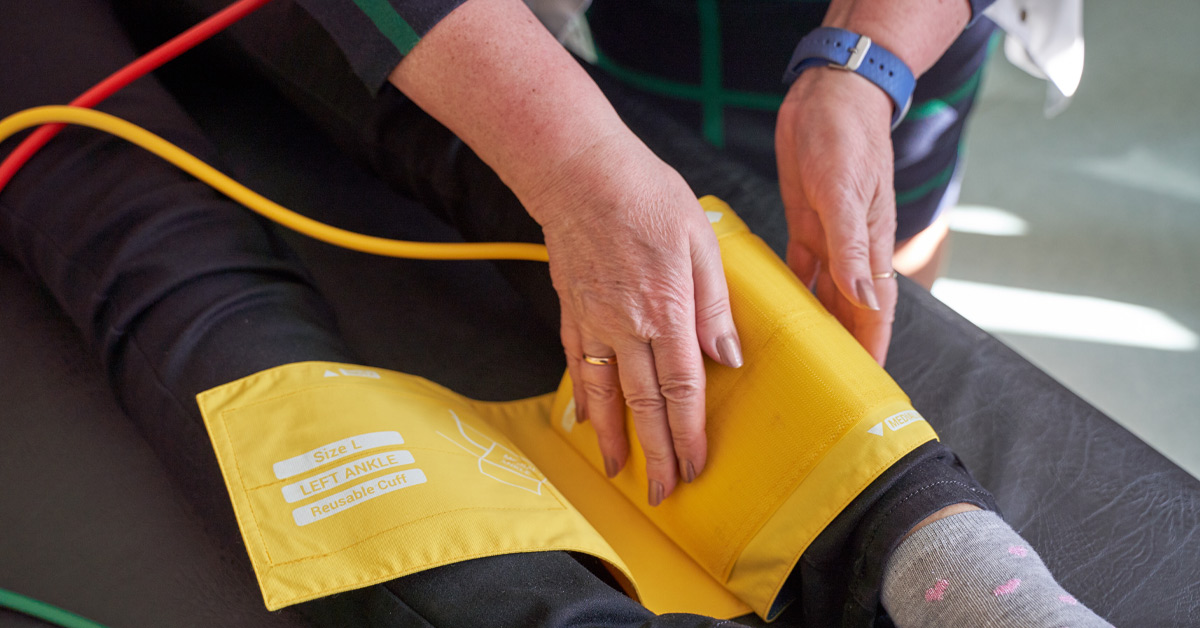
You’ll lie flat while your provider checks blood pressure in both your arms and ankles.
The test uses:
- Blood pressure cuffs placed on your arms and ankles
- A Doppler ultrasound device to detect blood flow
- Gentle cuff inflation and release to measure pressure
The highest pressure from each ankle is compared to the highest pressure in your arms to calculate your ABI.
What Do ABI Results Mean?
Your ABI result helps show how well blood is flowing to your legs.
1.0 to 1.4 – Normal
Blood flow is normal. Ankle pressure is equal to or slightly higher than arm pressure.
0.91 to 0.99 – Borderline
Blood flow may be slightly reduced. Your doctor may recommend further testing.
0.90 or lower – Abnormal
This suggests peripheral artery disease. Blood flow to the legs may be limited.
Below 0.40 – Severe PAD
Blood flow is significantly reduced. This increases the risk of pain at rest and nonhealing wounds.
Above 1.40 – Noncompressible arteries
Arteries may be stiff due to calcium buildup, which can affect results. Additional testing may be needed.
Additional Testing Options
If ABI results are unclear, your provider may recommend:
- Toe-brachial index (TBI)
- Vascular ultrasound
Why the Ankle Brachial Index Matters
Peripheral artery disease often develops slowly. Many people don’t realize they have it until symptoms become more serious.
The ankle brachial index helps detect circulation problems early, when treatment can be more effective.
PAD is also linked to a higher risk of:
- Heart attack
- Stroke
- Poor wound healing
- Severe loss of blood flow to the limbs
Ankle Brachial Index Testing in San Antonio
The ankle brachial index is a simple way to check for circulation problems before they become more serious. If you’re noticing leg pain, slow-healing wounds, or other symptoms, this test can help give you clear answers.
If you’re in San Antonio and concerned about your circulation, scheduling an ankle brachial index test is a quick step toward protecting your vascular health. Call our office today to take the next step toward better circulation.
Ankle Brachial Index FAQs
1. Does the ankle brachial index test hurt?
No. The test is painless. The cuffs may feel tight for a few seconds, but the discomfort passes quickly.
2. Do I need to prepare for an ABI test?
You may be asked to avoid exercise or caffeine before the test. Wearing loose clothing can also help.
3. Can ABI testing monitor PAD over time?
Yes. Doctors often repeat ABI testing to track changes in blood flow.