
DEXA Scans
Bone loss usually happens slowly and without pain. Most people don’t realize their bones are getting weaker until a fracture happens.
DEXA Scans in San Antonio provide an accurate way to measure bone density and detect bone thinning early. If you have risk factors for osteoporosis or concerns about bone strength, this simple test can give you clear answers. It can also help you take steps to protect your health.
Early detection makes it easier to lower your fracture risk and protect your independence as you age.
How Bone Loss Happens
Inside your bones is living tissue that’s always changing. Your body constantly breaks down old bone and builds new bone.
When you’re younger, your body makes new bone faster than it loses it. As you age, bone loss can happen faster than your body replaces it. Over time, bones become thinner and weaker. This is especially true after midlife and menopause in women.
The terms osteopenia and osteoporosis both describe bone thinning, but they aren’t the same. The main difference is how much bone has been lost and how high your fracture risk is.
Osteopenia
Osteopenia means your bone density is below normal, but not low enough to be classified as osteoporosis. It is often an early warning sign that bones are starting to weaken, and can progress over time if steps are not taken to protect bone strength.
Osteoporosis
Osteoporosis is a more advanced stage of bone loss. As bone density decreases, bones are more fragile and less able to handle everyday stresses. That’s why fractures can happen more easily, sometimes from minor injuries or falls that wouldn’t have caused a break earlier in life. These fractures can lead to:
- Chronic pain
- Loss of independence
- Disability
What is DEXA?
DEXA, short for dual-energy X-ray absorptiometry, is a test for measuring bone density.
Bone loss often happens slowly and without pain, so many people don’t realize their bones are getting weaker. A DEXA scan can find these changes early, when there is still time to take steps to protect bone strength and lower the risk of fractures. It helps diagnose osteoporosis and find bone thinning early, before a fracture happens in areas like the:
- Hip
- Spine
- Wrist
What to Expect During a DEXA Scan
A DEXA scan measures bone mineral density, usually in the hip and spine. Fractures in these areas can have the greatest impact on your health.
The scan uses two very low-dose X-ray beams to measure how much mineral is in your bones. The amount of radiation is very low. If you meet screening guidelines, the benefit of finding bone loss early outweighs the small radiation risk.
The procedure is painless and noninvasive. You don’t need to fast or stop your medications.
During the test:
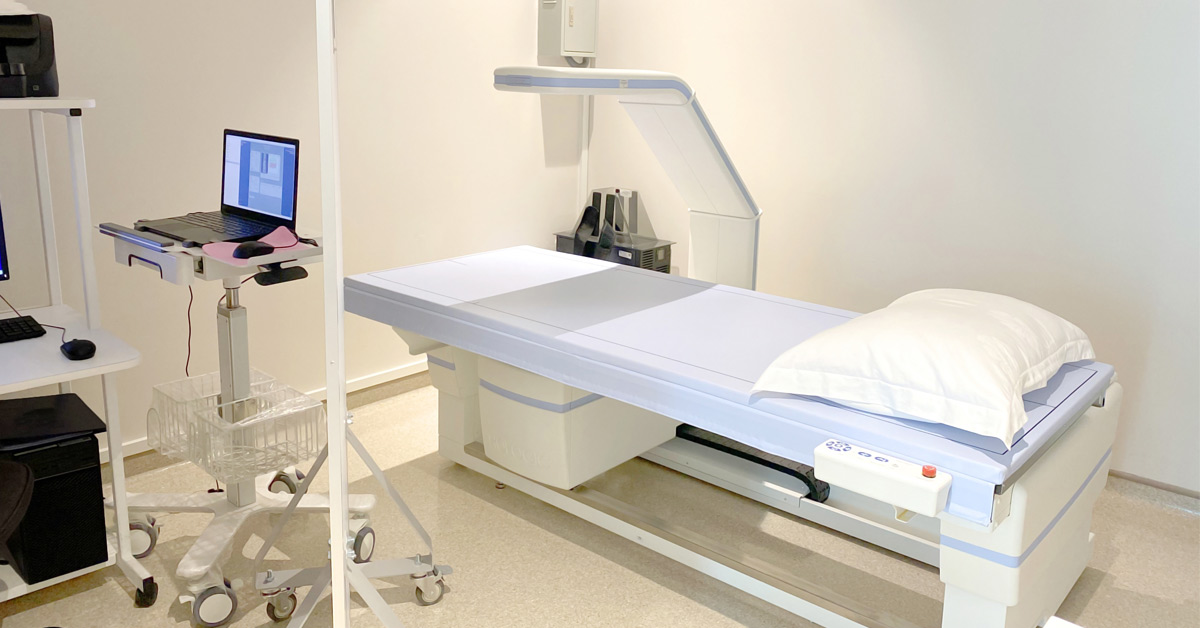
- You’ll lie flat on a padded table
- Your legs may be supported to align your hips and spine
- The scanning arm moves slowly above your body without touching you
- You may be asked to stay still or briefly hold your breath
The scan usually takes 10 to 20 minutes.
Understanding Your DEXA Results
Your results include two main scores:
T-score: The T-score compares your bone density to that of a healthy young adult at peak bone strength. It’s used to diagnose osteopenia and osteoporosis in postmenopausal women and older men.
Z-score: The Z-score compares your bone density to others your age and sex. It’s often used in younger women, men under 50, and children to see if bone loss may be linked to another medical condition.
Some people need repeat scans every one to two years, while others may need them less often. The timing depends on your risk factors and previous results.
Even if your results are normal, no test can guarantee you’ll never have a fracture. Still, a DEXA scan gives important information about your bone health and helps guide the next steps in your care.
When Is DEXA Scan Recommended?
Bone density screening is recommended for all women aged 65 and older, as bone loss accelerates after menopause. Women between the ages of 50 and 64 may also be candidates if they have risk factors for osteoporosis, including:
- Having a parent who fractured a hip
- Low body weight
- Smoking
- Alcohol
- Early menopause
- Long-term use of steroid medications
Men are also affected by osteoporosis, though it is less common. Routine screening for all men is not universally recommended, but men with risk factors may benefit from a DEXA scan, including those with:
- Low testosterone
- Chronic steroid use
- Previous fractures
- Prolonged immobility
Certain medical conditions can also increase the risk of bone loss regardless of age or sex. These include:
- Intestinal disorders
- Rheumatoid arthritis
- Multiple sclerosis
- Chronic kidney disease
- Thyroid disorders
- Long-term inflammatory conditions
Schedule DEXA Scans in San Antonio
If you have risk factors for osteoporosis or you’re concerned about bone strength, DEXA Scans can help you understand your bone health.
Our team provides DEXA Scans in San Antonio and is committed to helping you protect your long-term bone health. Schedule an appointment today to learn whether bone density testing is right for you.
DEXA Scan FAQs
1. Is a DEXA scan safe?
Yes. A DEXA scan uses very low levels of radiation, lower than a standard chest X-ray. For people who meet screening guidelines, the benefits of finding bone loss early outweigh the small amount of radiation used.
2. What happens if my DEXA scan shows osteopenia or osteoporosis?
If low bone density is found, your doctor will review your fracture risk and discuss steps to protect your bones, such as:
- Lifestyle changes
- Nutrition support
- Exercise recommendations
- Fall prevention strategies
- Medications
- Follow-up monitoring to track changes over time